
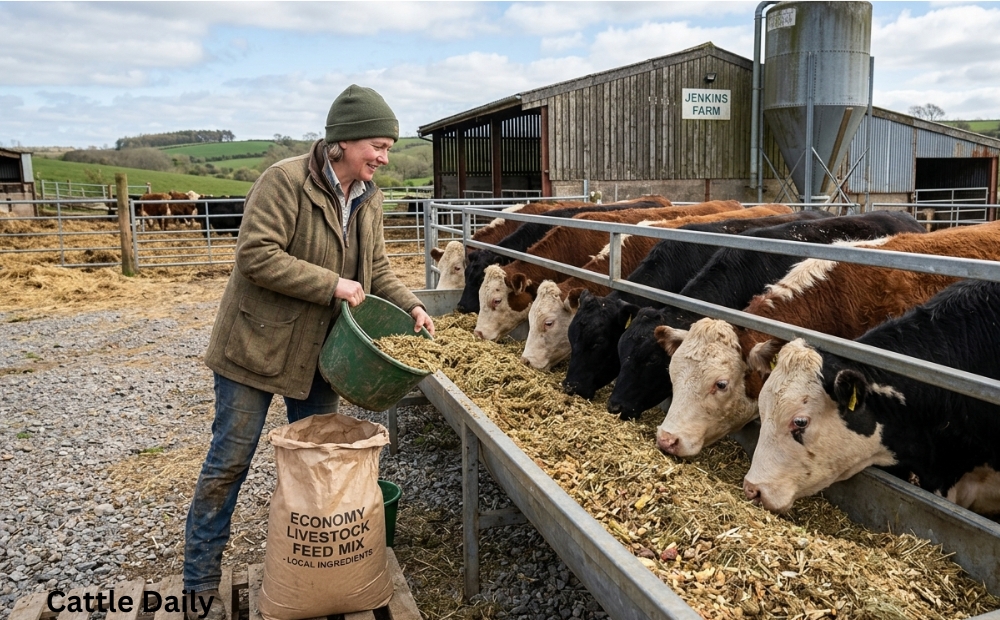
Feeding Cattle on a
Tight Budget
Cost-cutting without sacrificing nutrition — a working producer's playbook for 2026.
Feed costs represent 60–75% of total cattle production expenses — and in today's market, the margin between breaking even and turning a profit often comes down to how intelligently producers manage nutrition on a budget. This guide covers practical, field-tested strategies to slash feed costs without compromising cow body condition, calf growth, or reproductive performance. From leveraging feed byproducts and grazing management to smarter purchasing and ration balancing, every strategy here has been validated by university research and applied by working producers. The goal is simple: spend less per unit of nutrition delivered without shortchanging the animal.
By CattleDaily Editorial Team | Updated July 2026 | 11 min read
1. Why Feed Costs Spike and Where the Real Waste Hides
Feed prices fluctuate with input costs, weather, and commodity markets — but the hidden cost multipliers within most operations are within a producer's control. Research from land-grant universities consistently identifies the same culprits: overfeeding relative to actual nutritional requirements, feeding at the wrong life stage, poor forage utilisation, and paying retail for nutrients that are available wholesale in byproduct form.
2. Know Your Numbers: Feed Cost Per Unit of Nutrition
The most powerful budget tool available costs nothing: calculating feed value on a dry matter and nutrient-delivered basis rather than an as-purchased price. Two feeds at the same purchase price can differ by 40% in actual nutritional value delivered to the cow once moisture, digestibility, and waste are accounted for.
Cost per Unit of TDN — The Key Comparison
| Feed | As-Fed Price/Ton | DM % | TDN (% of DM) | Cost/Ton TDN | Value Rating |
|---|---|---|---|---|---|
| Corn grain | $230 | 88% | 88% | $296 | Good |
| Wet distillers grains | $52 | 33% | 85% | $186 | Best |
| Dry distillers grains | $210 | 90% | 82% | $285 | Good |
| Soybean hulls | $185 | 90% | 80% | $257 | Good |
| Grass hay (avg quality) | $175 | 88% | 54% | $368 | Fair |
| Prairie hay (low quality) | $135 | 90% | 46% | $326 | Fair |
| Cotton gin trash | $45 | 90% | 43% | $116 | Best (energy cost) |
| Corn silage (self-grown) | $38–55* | 35% | 72% | $150–218 | Best (owned acres) |
| Stockpiled fescue (self-grown) | $35–65* | 30% | 62% | $188–350 | Best overall |
*Includes estimated production costs (seed, fertiliser, equipment). Prices reflect 2025–2026 US averages and vary significantly by region and season. Always calculate with your actual local prices.
Example: $175 hay at 88% DM and 54% TDN = $175 ÷ 2,000 ÷ 0.475 = $0.184 per lb TDN
3. Feed Byproducts: High Nutrition, Low Price
Feed byproducts from ethanol production, cotton processing, oilseed crushing, and food manufacturing are the single most underutilised budget tool in cattle feeding. These materials are nutritionally dense, often cheaper per unit of protein or energy than conventional feeds, and available year-round in most regions with ethanol plants, cotton gins, or food processing facilities.
| Byproduct | CP % | TDN % | Max Inclusion | Key Benefit | Caution |
|---|---|---|---|---|---|
| Wet Distillers Grains (WDGS) | 28–32% | 82–88% | 40% of DM diet | Cheapest protein per unit; excellent palatability | High sulphur — limit to 15% DM in high-grain diets |
| Dry Distillers Grains (DDGS) | 26–30% | 80–85% | 35% of DM diet | Long shelf life; easily transported and stored | Same sulphur concern as WDGS; monitor intake |
| Soybean Hulls | 10–12% | 75–82% | 50% of DM diet | Highly digestible fibre; safe at high inclusions | Low protein — pair with a protein source |
| Corn Gluten Feed (dry) | 18–22% | 76–82% | 40% of DM diet | Balanced energy/protein; versatile | Can cause loose manure at high rates |
| Cottonseed (whole) | 22–24% | 84–90% | 15% of DM (cows) | Highest energy byproduct; fat boosts cow BCS | Gossypol limits — no more than 6 lbs/head/day |
| Wheat Midds/Bran | 14–18% | 72–78% | 30–40% of DM diet | Good phosphorus source; moderate energy | High in P — review Ca:P ratio in full ration |
| Beet Pulp (dried) | 8–10% | 74–80% | 30% of DM diet | Excellent digestible fibre; bloat-safe | Higher cost than other byproducts; freight sensitive |
4. Maximise What Grows: Grazing Strategies That Replace Hay
Every day cattle spend on standing forage instead of harvested hay eliminates harvesting, baling, storing, and feeding costs. The opportunity cost of under-utilising your own land is enormous — and most operations are leaving 30–60 days of potential grazing on the table each year.
Top Grazing Strategies for Budget Operations
- ✔ Stockpile tall fescue or orchardgrass. Apply 60–80 lbs of nitrogen in August, close the paddock for 60–90 days, and strip-graze from November through January. Stockpiled fescue can replace 45–75 hay-feeding days for dry cows at a cost of $35–65/ton DM — a fraction of purchased hay.
- ✔ Graze crop residues after harvest. Corn stalks, grain sorghum stubble, and wheat straw fields are often available for a nominal access fee or land-use agreement. Dry beef cows can maintain condition on corn stalks for 30–60 days with only protein supplementation.
- ✔ Plant winter annuals for fall/spring gap grazing. Winter rye, triticale, or turnips seeded in September can provide high-quality grazing from October and again in early spring — covering the two most expensive forage-gap periods.
- ✔ Use strip grazing everywhere. Polywire and a solar energiser cost $200–$400 and save 20–30% of every forage allocation through better utilisation and less trampling waste. On a hay-grazing combination system, the payback is usually within one feeding season.
- ✔ Implement rotational grazing on summer pastures. Moving cattle through 4–8 paddocks allows pasture recovery that increases total seasonal forage production by 30–50% compared to continuous grazing on the same acreage — reducing the hay you need to buy come winter.
5. Balancing Rations on a Budget Without a Nutritionist
Many producers over-supplement because they're guessing at what their base forage provides. Forage testing is the highest-return $25–$40 investment in budget cattle feeding — yet the majority of hay-feeding operations never test their forage. Knowing actual crude protein and TDN in your hay tells you precisely how much (or how little) supplement is needed.
- 🔴 Over-supplementing by $30–60/ton unnecessarily
- 🔴 Feeding protein supplements when forage is adequate
- 🔴 Buying energy supplements to hay that's already 60%+ TDN
- 🔴 Failing to detect low-quality hay before it affects BCS
- 🔴 No ability to shop byproducts intelligently
- 🟢 Supplement only what the forage doesn't provide
- 🟢 Use cheap energy byproducts only when actually needed
- 🟢 Match supplement rate to cattle life stage precisely
- 🟢 Catch low-CP forage early and correct proactively
- 🟢 Justify every dollar of the feed bill with a number
Nutritional Requirements by Life Stage (Beef Cow)
| Stage | Daily DM (lbs) | CP Required | TDN Required | Budget Priority |
|---|---|---|---|---|
| Dry, mid-pregnancy (4–7 mo) | 24–26 | 7.0–7.5% | 52–55% | Lowest cost phase |
| Late gestation (last 60 days) | 26–28 | 8.5–9.5% | 56–60% | Moderate investment |
| Early lactation (first 90 days) | 28–32 | 10–12% | 60–65% | Highest need — don't cut |
| Mid-lactation (90–180 days) | 27–30 | 9–10% | 58–62% | Moderate — monitor BCS |
| Weaned calf (400–600 lbs) | 14–18 | 12–14% | 64–68% | High CP critical — use byproducts |
| Yearling stocker (600–900 lbs) | 18–22 | 10–12% | 62–66% | Byproducts ideal here |
6. Buying Smart: Timing, Sourcing and Contracts
When you buy matters almost as much as what you buy. Feed prices are highly seasonal and cyclical — producers who buy hay in July rather than January, grain in fall rather than spring, and lock in byproduct contracts in advance consistently pay 15–30% less per ton than those reacting to supply gaps in the middle of winter.
- ✔ Buy hay at harvest time (June–August). Hay bought at the point of baling is typically $30–$60/ton cheaper than hay purchased in February when drought, weather events, and transportation costs are compounded. Arrange storage and buy 120% of your estimated need to create a buffer and hedge against quality shortfalls.
- ✔ Lock in byproduct contracts in October. Ethanol plants and co-ops often offer 6-month pricing contracts on distillers grains and corn gluten feed. Locking in during fall avoids the January–March price surge when demand from feedlots peaks.
- ✔ Buy grain at harvest (September–November). Corn, grain sorghum, and oats are cheapest immediately post-harvest when elevator prices reflect full-bin discounts. On-farm storage bins pay for themselves in 3–5 years in most markets.
- ✔ Network with local crop farmers. Direct relationships with row-crop producers can unlock below-market prices on soft corn, off-grade grain, and damaged grain — all nutritionally adequate for cattle at discounts of 20–40% below elevator price.
- ✔ Pool buying with neighboring producers. Co-operative purchasing groups can negotiate semi-load minimums that reduce freight significantly. A group of 3–5 producers sharing a semi-load of DDGS from an ethanol plant can reduce delivered price by $15–25/ton vs. smaller individual deliveries.
- ✘ Avoid retail co-op feed bags for bulk nutrition. Bagged commercial supplements are priced for convenience, not economy. Their cost per unit of protein is typically 2–3x the equivalent from a bulk byproduct or custom mineral mix. Use them only for trace minerals and additives with no bulk equivalent.
7. Budget Mineral Programs That Actually Work
Minerals are non-negotiable for cattle health, reproduction, and immunity — but the way most operations deliver minerals is dramatically more expensive than necessary. Commercial mineral tubs and pre-mixed blocks are priced for convenience; custom loose mineral blends deliver the same nutritional outcome at 40–60% lower cost.
| Mineral Delivery Method | Approx Cost/Cow/Year | Intake Control | Flexibility | Best For |
|---|---|---|---|---|
| Commercial mineral tub (30-lb) | $85–$130 | Poor — cattle over-consume | None | Remote/infrequent check operations |
| Pressed mineral block | $65–$95 | Fair | Low | Supplement to other delivery |
| Commercial loose mineral (branded) | $55–$80 | Good if managed | Low | Convenience |
| Custom loose mineral (bulk blend) | $32–$55 | Good if managed | High — region/forage specific | Budget-focused operations |
| Injections + trace mineral boluses | $12–$22 | Precise | High | Targeted deficiency correction |
8. Match Feed Investment to Life Stage
Not all cattle need the same feed at the same time. One of the most effective budget strategies is strategically front-loading nutrition where it has the highest return — and pulling back where nutritional requirements are genuinely low without consequence.
- ✔ Mid-gestation dry cows: minimum supplementation. A dry, mid-pregnant cow at BCS 5–6 maintaining on average-quality grass hay at 8–9% CP needs little or no supplementation. This 90-day window is your lowest-cost feeding period — capitalise on it.
- ✔ Last 60 days of gestation: invest in quality. Foetal development, colostrum quality, and subsequent rebreeding rate are all determined in the last 60 days before calving. This is not the place to cut. Adding 2–3 lbs/day of a high-CP byproduct (DDGS, corn gluten) during this period costs $8–12 per cow and pays dividends in calf vigour and weaning weight.
- ✔ Early lactation: feed the cow or lose the calf. The highest-performing cows are the ones who get priority energy in the 60–90 days post-calving. A cow that loses more than 1 body condition score post-calving has dramatically reduced pregnancy rates. This is your second non-negotiable investment window.
- ✔ Stocker calves: byproducts shine here. Calves from 400–800 lbs have high protein requirements but low price sensitivity — meaning cheap, high-CP byproducts like DDGS or corn gluten drive excellent ADG at low cost. A basic backgrounding ration of 60% stockpile/hay, 30% DDGS, 10% corn can drive 2.0–2.5 lbs/day ADG at very low feed cost.
- ✘ Don't over-condition mature cows before calving. Cows at BCS 7+ before calving are expensive to maintain and have higher rates of dystocia. Target BCS 5–6 at calving. Over-fat cows represent wasted feed investment during dry gestation.
9. Total Savings Potential: What's Realistic?
The following savings estimate applies a full budget strategy to a 100-cow beef operation currently spending an average of $135/cow for winter feeding (120 days):
These numbers are conservative. Operations that also implement rotational grazing to extend summer pasture season, add winter annuals, and pool-purchase byproducts routinely report savings of $150–$200 per cow per year — and on a 100-cow operation, that's $15,000–$20,000 returning to the bottom line without selling a single additional animal.
10. Frequently Asked Questions
Related Reading from CattleDaily
More field-tested guidance for producers who want to feed better and spend less
Published on CattleDaily.com — practical guidance for working cattle producers.
© 2026 CattleDaily. All rights reserved. Consult your county Extension agent, certified nutritionist, or veterinarian for operation-specific feed and health recommendations.